
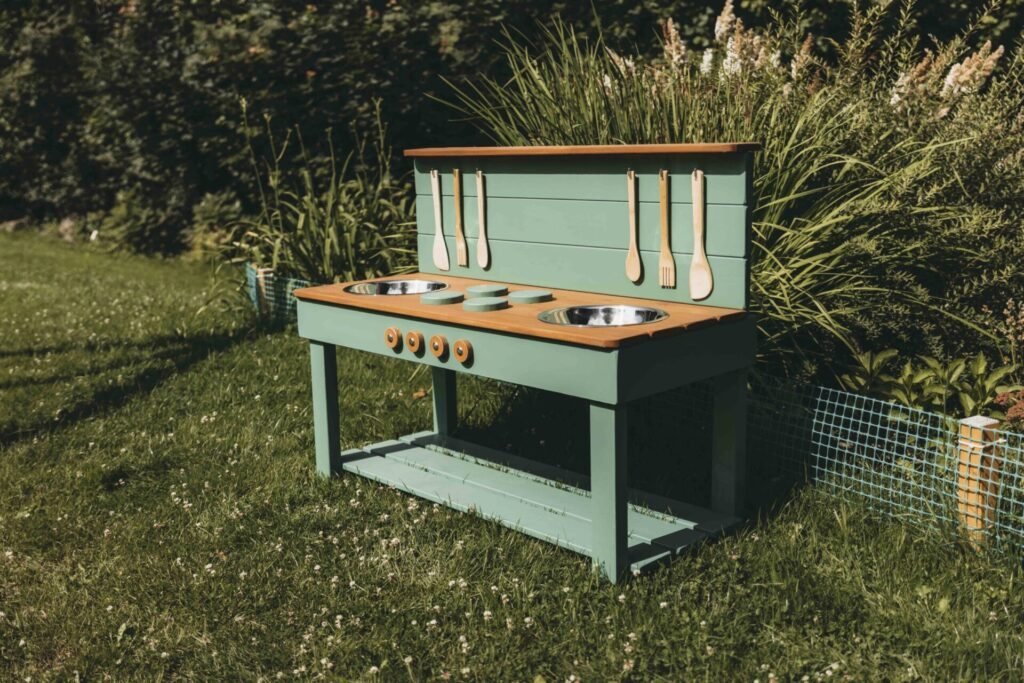
Short answer
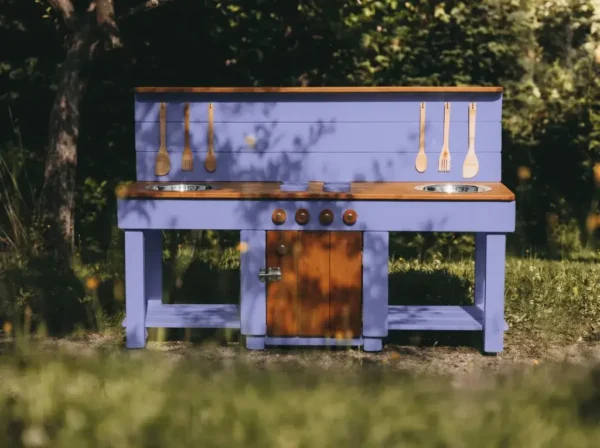
Most families do not need a mud kitchen with a tap. A working tap needs either a hose connection, which turns the play area into a bog and freezes in winter, or a small tank that empties in minutes. Our kitchens have two lift-out stainless steel sinks and no tap; water arrives in a jug, a watering can or a £15 push-tap drinks dispenser standing on the shelf, which gives children running water they control and gives you control over how much reaches the garden.
The three kinds of “tap” you will see
“Mud kitchen with working tap” is one of the most searched phrases in this category, and the phrase hides three very different products. Before you pay extra for one, it is worth knowing which you would be getting.
| Type | How it works | What happens in a British garden |
|---|---|---|
| Hose-fed tap | Connects to the outside tap by hose | Unlimited water; the lawn is a bog by the second day; the fitting splits in the first frost |
| Tank and pump | A small tank fills a tap by hand pump | Fun for ten minutes, empty in fifteen, refilled by an adult; the pump is the first part to break |
| Decorative tap | A plastic tap that turns and does nothing | Children work it out in seconds and ignore it |
The tank-and-pump version is the one most people imagine when they picture a “working tap”. It is a good toy in its own right. It is also a small plastic mechanism bolted to a wooden kitchen that will outlive it several times over, which is why we chose not to build one in.
What we do instead
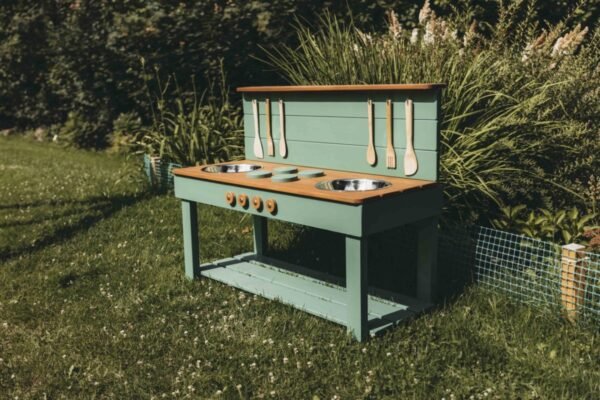
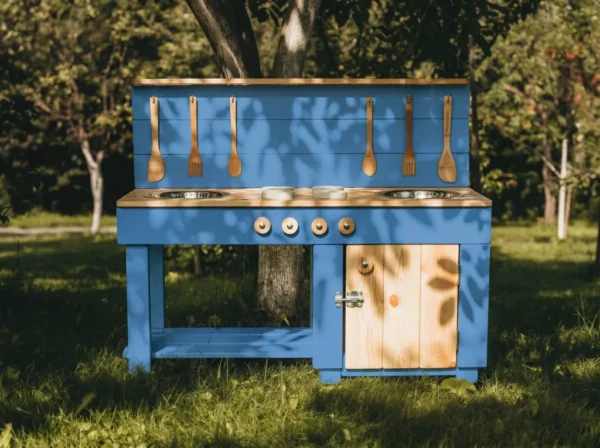
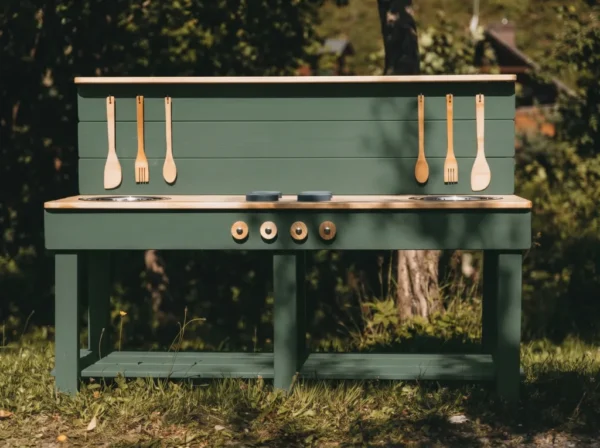
Every kitchen we make has two removable stainless steel bowls set into the worktop. Water comes to them the way it comes to a campsite kitchen: carried. A jug, a watering can, or a drinks dispenser with a push tap standing on the shelf.
That is not a compromise. It is the version we would choose for our own children, for three reasons.
- Children control the water, and so do you. A five-litre dispenser is five litres. When it is empty, the game changes to fetching, which is play too. A hose tap is unlimited, and the garden shows it.
- Carrying water is the best part of the game. Filling a jug at the outside tap, walking it across the lawn without spilling, pouring it into the sink: that is balance, strength, planning and patience, and a three-year-old takes it very seriously.
- There is nothing to freeze, split or leak. A wooden kitchen with steel sinks goes through a British winter without a thought. A kitchen with plumbing does not.
Every model has two lift-out steel sinks
How to give a mud kitchen running water anyway
If your child specifically wants a tap, and many do, the best answer costs £15 to £25 and sits on the shelf.
- A drinks dispenser with a push tap. The 5 to 8 litre glass or plastic ones sold for parties. Fill it from the outside tap, stand it on the shelf or the worktop, and the child has a tap they can work alone. Ours came from a supermarket.
- A camping water carrier with a tap. Tougher than the party dispensers, usually 10 litres, and the tap is designed to be used by muddy hands.
- A watering can with a rose. Not a tap, but a shower, which for potion-making is better. Two-litre cans are the right size for a toddler.
- A garden pump sprayer. For older children, a hand-pumped pressure sprayer gives a jet and a mist. Supervise, and never let it near anything but water.
We go into the detail, including the DIY hose-tap route for people who really want one, in water play at a mud kitchen.
Keeping the water side healthy
Whichever route you take, the rule that matters is the same: tip the sinks out at the end of play. Standing water in a fixed sink or a tank is the only real hygiene problem a mud kitchen has, and a lift-out bowl solves it in thirty seconds. Our page on mud kitchens with a sink explains why removable bowls beat moulded dips and plastic tubs, and how to clean a mud kitchen covers the weekly routine.
Frequently asked questions
Do your mud kitchens have a working tap?
No. They have two lift-out stainless steel sinks and no plumbing. A push-tap drinks dispenser on the shelf gives children running water they can work themselves, for around £15 to £25.
Can I add a tap to a mud kitchen myself?
Yes. A hose-fed garden tap can be fitted to a side panel with a standard tank connector, and a hose run from the outside tap. Fit it high enough to get a bucket under, and disconnect the hose before the first frost.
Is a mud kitchen with a water tank worth it?
For a toddler, a tank of five to ten litres empties in minutes and needs an adult to refill it. A separate dispenser does the same job, costs less, and can be replaced when the tap wears out without touching the kitchen.
How do children get water to a mud kitchen without a tap?
In a jug or watering can from the outside tap, or from a dispenser standing on the kitchen. Carrying water is a large part of the play, and it limits how much water ends up on the lawn.