Mud has been a childhood staple for generations — and for good reason. While it might trigger a familiar parental groan at bath time, research increasingly shows that mud play is one of the most valuable activities your child can engage in. Here’s what the science says, and how a mud kitchen can make the most of it.
What Is Mud Play?
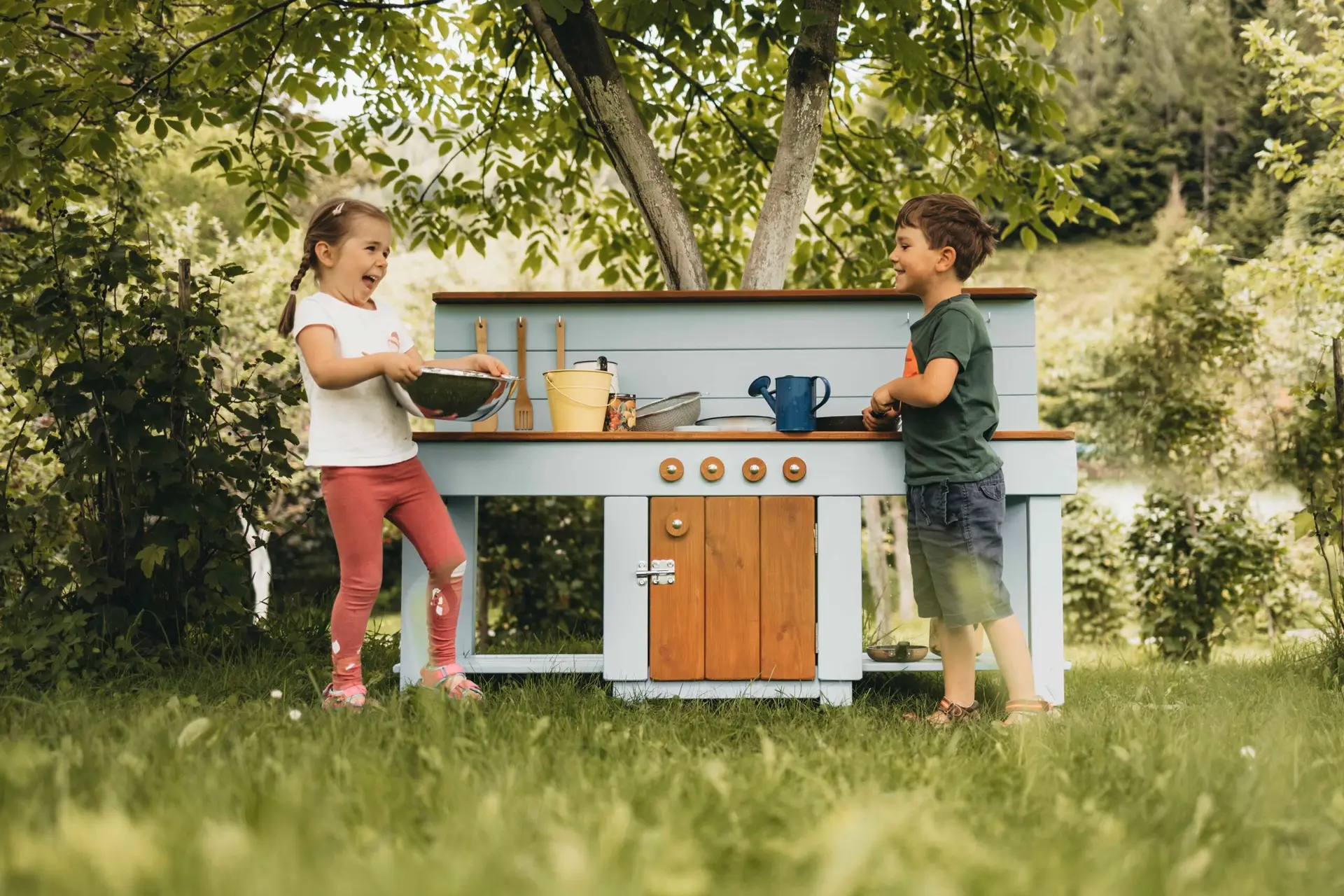
Mud play is exactly what it sounds like: unstructured, open-ended play using mud, water, natural materials, and simple tools. A mud kitchen — a purpose-built outdoor station with surfaces, a sink, and storage — takes mud play to another level by giving children a focused yet imaginative environment to explore.
The Developmental Benefits of Mud Play
Sensory Development
Mud engages multiple senses simultaneously. Children feel different textures (wet, dry, gritty, smooth), smell the earth, hear the squelch, and see their creations take shape. This multi-sensory experience is crucial for brain development, particularly in children under eight.
Fine Motor Skills
Scooping, stirring, pouring, rolling, and pressing mud all require the kind of precise hand and finger movements that underpin writing, drawing, and self-care skills. Occupational therapists frequently recommend sensory play as part of fine motor development programmes.
Scientific Thinking
What happens when you add water to dry soil? Why does mud hold its shape sometimes and not others? Mud play naturally introduces children to observation, hypothesis-testing, and cause-and-effect reasoning — the foundation of scientific thinking.
Social and Emotional Development
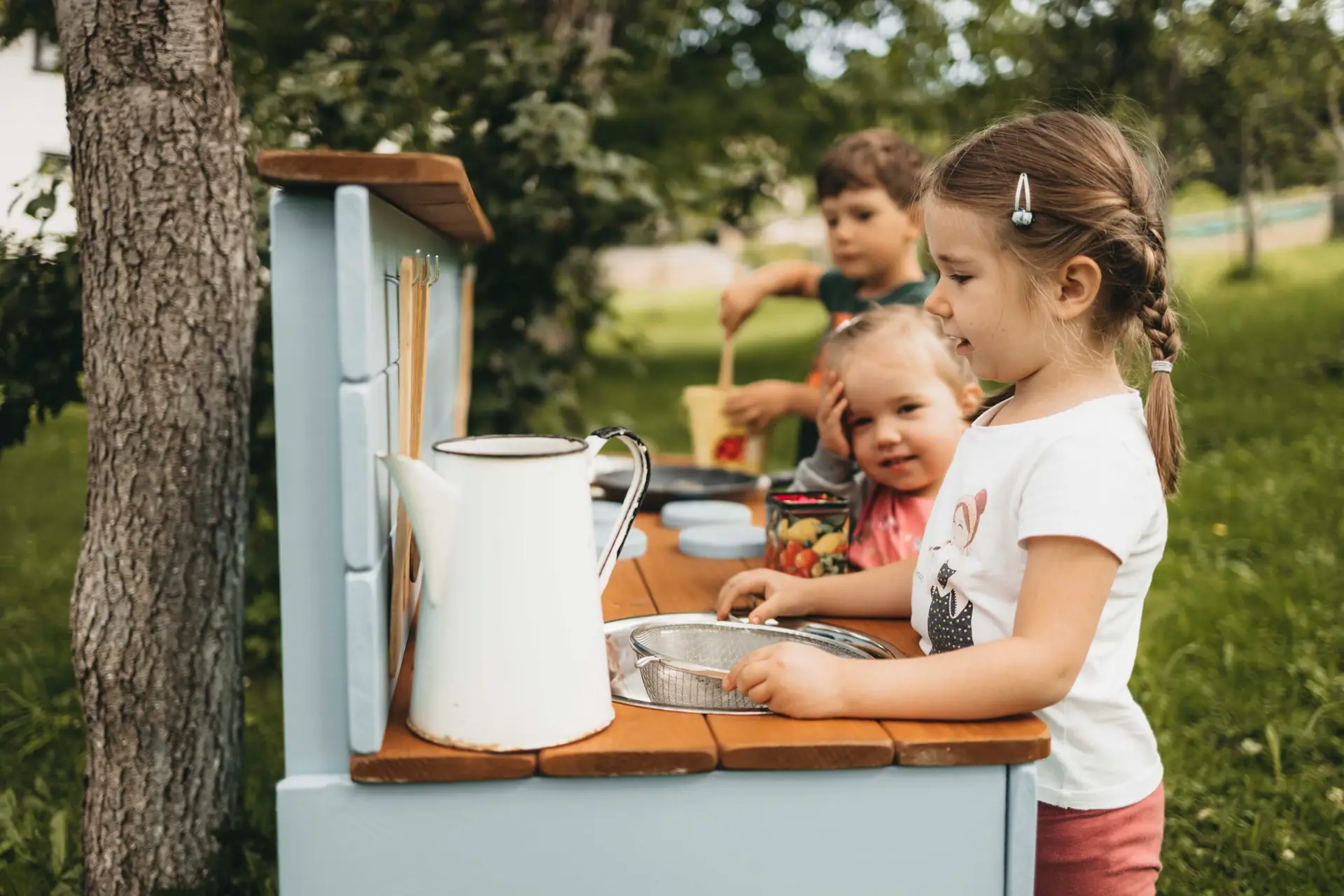
Mud kitchens become social hubs. Children negotiate roles (“I’m the chef, you’re the customer”), share resources, and navigate disagreements — all vital social skills. The low-stakes nature of play means mistakes don’t matter, which builds resilience and a willingness to experiment.
The “Dirt Is Good” Argument
Beyond psychology, there’s growing evidence that exposure to soil microbes supports children’s immune systems. The “hygiene hypothesis” suggests that overly sterile environments may contribute to rising rates of allergies and autoimmune conditions. A healthy amount of outdoor mess — mud included — may actually help your child’s body learn to regulate its immune responses.
Why a Mud Kitchen Is the Ideal Mud Play Setup
Free mud play in the garden is wonderful. A mud kitchen makes it better by:
- Giving it structure: A defined play space with surfaces, tools, and a sink keeps play focused and extended.
- Making tidy-up easier: Everything has a home. The mud stays in one area.
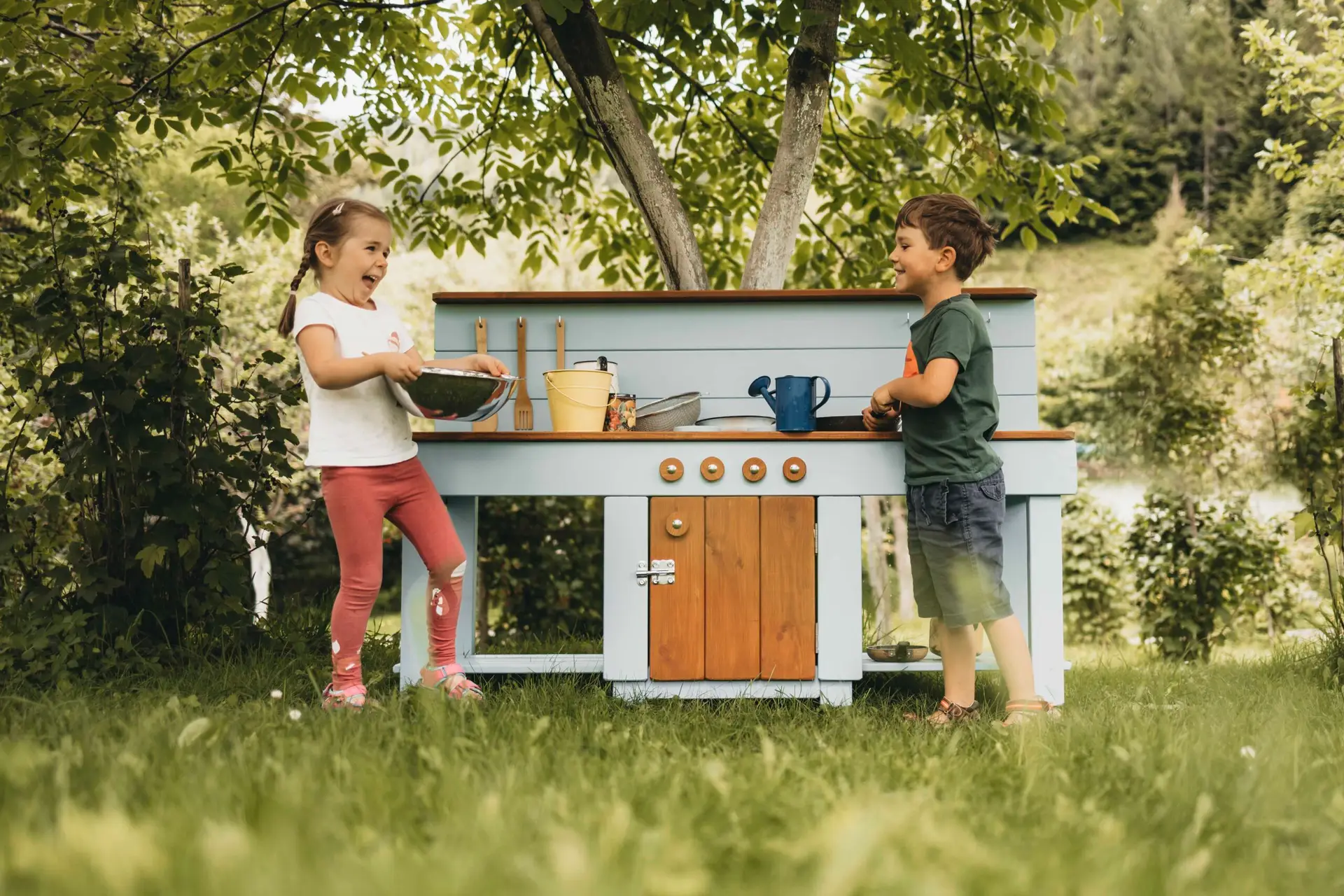
- Growing with your child: A 3-year-old uses it as a sensory table. A 7-year-old runs a restaurant. A 10-year-old conducts experiments.
Tips for Getting the Most Out of Mud Play
- Add loose parts: Sticks, leaves, pine cones, stones, and flower petals extend the play enormously.
- Keep water accessible: A small watering can near the kitchen lets children control the consistency of their mud independently.
- Step back: The magic of mud play lies in child-led discovery. Resist the urge to direct.
- Dress for it: A good pair of wellies and a waterproof apron means mess is manageable, not stressful.
Mud play isn’t something to be merely tolerated — it’s something to be celebrated. And with the right mud kitchen, it becomes one of the most memorable parts of your child’s outdoor childhood.
Explore our range of handcrafted mud kitchens and find the one that’s right for your garden. Shop now.